
Sustainability
-

Biochar Project
-

The Veggie Patch & Orchard
-

Solar Power


Looking after the place that looks after us.
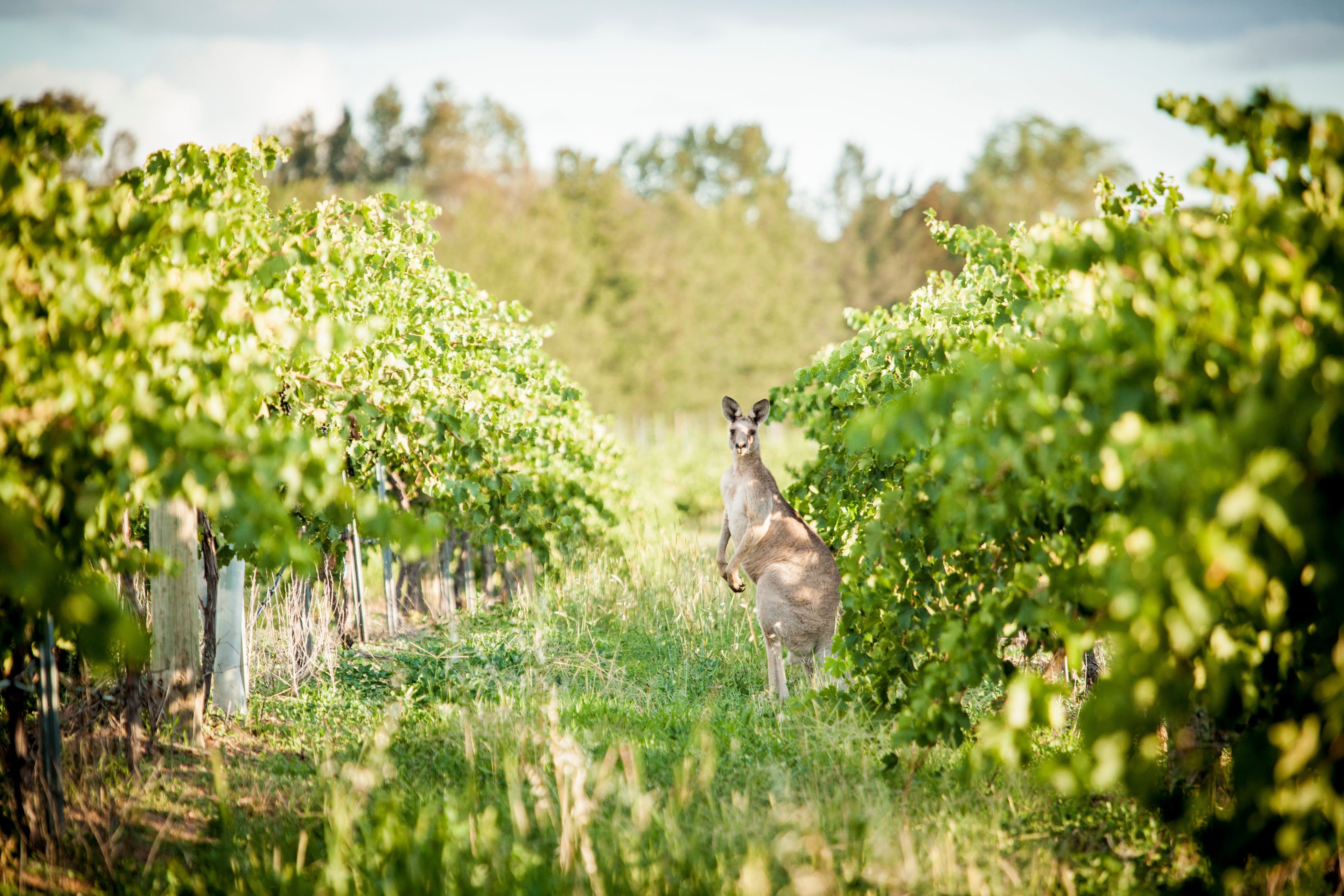
Grove Estate has been growing grapes in the Hilltops since 1989. For us, sustainability is about looking closely at how we use the land, water and energy available to us, reducing waste where we can, and finding better ways to put resources back into the property.
Some of these practices have been part of Grove for decades. Others are newer projects that we are still learning from.
There is plenty more we want to do, but these are some of the ways we are working towards a more sustainable Grove Estate.
Growing with less water
Around 90% of our vineyard area is not irrigated.
The Hilltops climate, soils and established vines allow the majority of our vineyard to grow without regular irrigation, significantly reducing the amount of water and pumping required across the property.
Water is a valuable resource in regional Australia, so making the most of our natural growing conditions has always been an important part of how we farm.
Rainwater at the cellar door
The water used at our cellar door comes from rainwater collected and stored on the property.
Our rainwater system has supported the cellar door for many years by making use of a resource that falls right here at Grove.
Powered by the sun
A large solar system at Grove generates much of the electricity used by our cellar door.
That power supports the everyday operation of the venue, including refrigeration, cool storage, kitchen equipment, lighting and general cellar door operations.
For a business that uses electricity seven days a week whether the doors are open or not, producing a significant portion of that energy here on the property makes sense.
From our garden
Our vegetable and herb garden started as a small project and has gradually become part of the way we operate the cellar door.
We grow what we can, when we can, with fresh herbs and vegetables making their way straight from the garden into the kitchen.
You might find Grove-grown produce on our small plates, behind the bar or on our pizzas, where seasonal vegetables from the garden can travel only a few metres before ending up in the wood-fired oven.
A long-term orchard
We have also planted a small orchard of more than 30 fruit trees across the property.
This is one of our longer-term projects. As the trees establish and begin producing properly, the aim is to grow more of the fruit we use across our grazing plates, catering, desserts and cocktail service right here at Grove.
We are planting now with the intention of supplying more of our own food in the years ahead.
Together with the vegetable garden, it is another step towards making better use of the land around the cellar door and reducing how much produce needs to be brought onto the property.
Composting what we can
Food and garden waste does not always need to be waste.
We compost suitable organic material from around Grove and return it to the property, where it can contribute organic matter back into our soils and gardens.
As our food offering has grown, so has the opportunity to look more closely at what comes out of the kitchen and find better uses for it.
Reducing what goes into the bin is an ongoing project rather than a finished one.
Vineyard prunings, meet biochar
One of the more interesting pieces of equipment to arrive at Grove recently is our biochar unit.
Every winter, pruning the vineyard produces a considerable amount of woody material. Rather than simply treating those prunings as waste, we can now turn some of them into biochar.
Biochar is produced by heating organic material such as vineyard prunings to very high temperatures with limited oxygen.
Instead of burning completely to ash, part of the material is converted into a stable, carbon-rich form of charcoal.
That biochar can then be returned to the soil.
The vines originally absorbed carbon dioxide from the atmosphere while they were growing. Converting some of the pruned material into biochar allows a portion of that carbon to remain stored in a stable form for much longer than it would through normal decomposition or burning.
Biochar is also being studied in Australian vineyards for its potential to improve properties such as water and nutrient retention in certain soils.
For us, the idea is pretty compelling. Take something produced by the vineyard every year, turn it into something useful, and put it back into the vineyard.
We are still learning about biochar and how best to use it at Grove, but that is part of the fun.
Looking after our soils
Healthy vineyards start with healthy soil.
We use organic fertilisers and sprays and look for opportunities to reduce unnecessary inputs across the vineyard.
Our approach is practical rather than absolute. We want to make decisions based on what each season and vineyard block actually needs, while continuing to improve the way we care for the soil beneath it.
The same thinking sits behind our composting and biochar projects. Wherever possible, we want organic material produced on the property to become a resource rather than a waste product.
There is always plenty more to do!